Remote ethnography
Fortune 10 e-commerce
Studied 300+ hours of delivery van footage to find out if in-van storage pockets were actually worth rolling out
A fortune 10 e-commerce company had pockets, modular storage compartments installed in delivery vans, and wanted data to inform whether to roll them out across states in the US. I ran a remote video ethnography study across 11 vans to meet this learning objective .
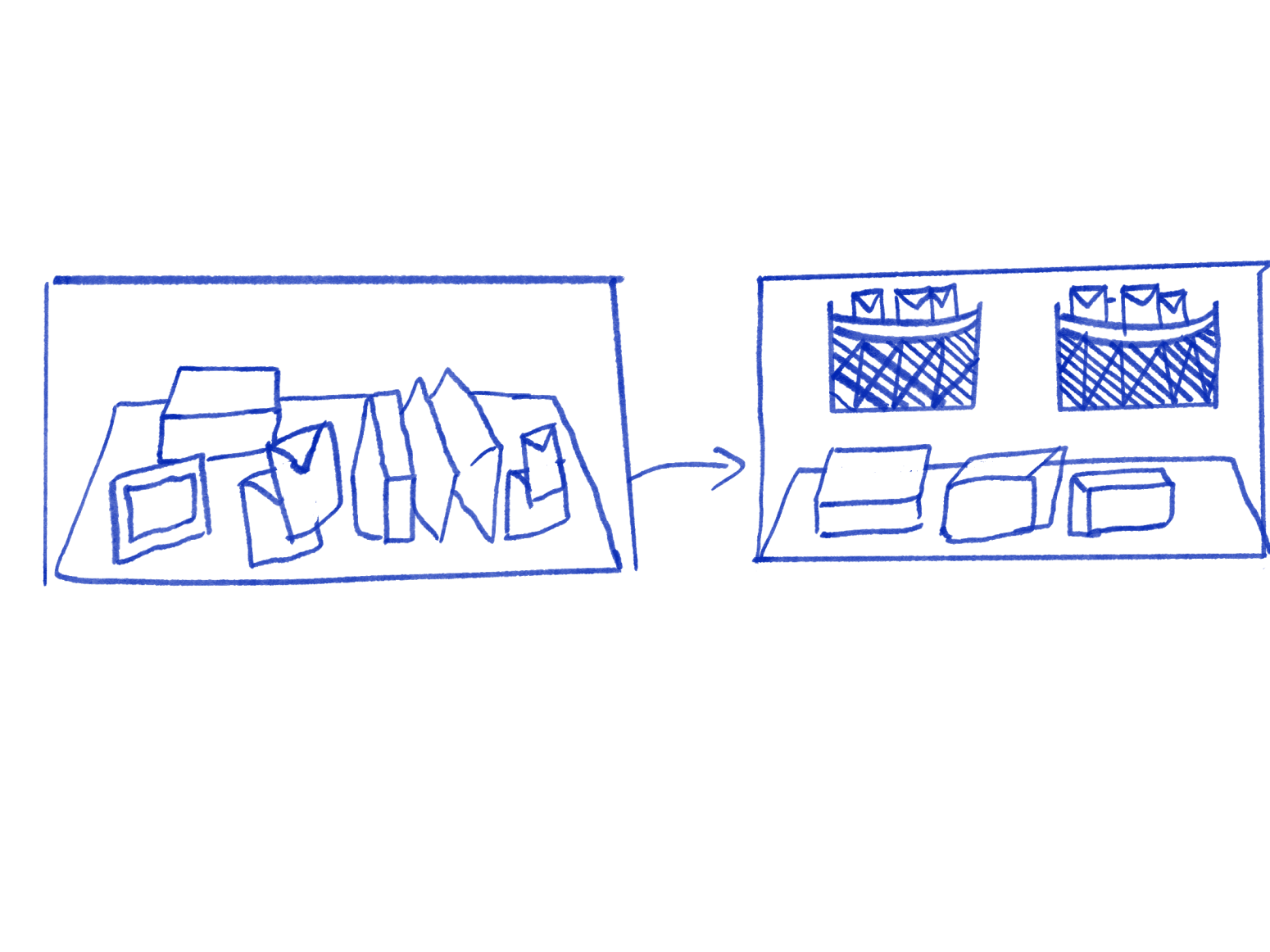
Packages, disorganized on the table, versus organized into pockets
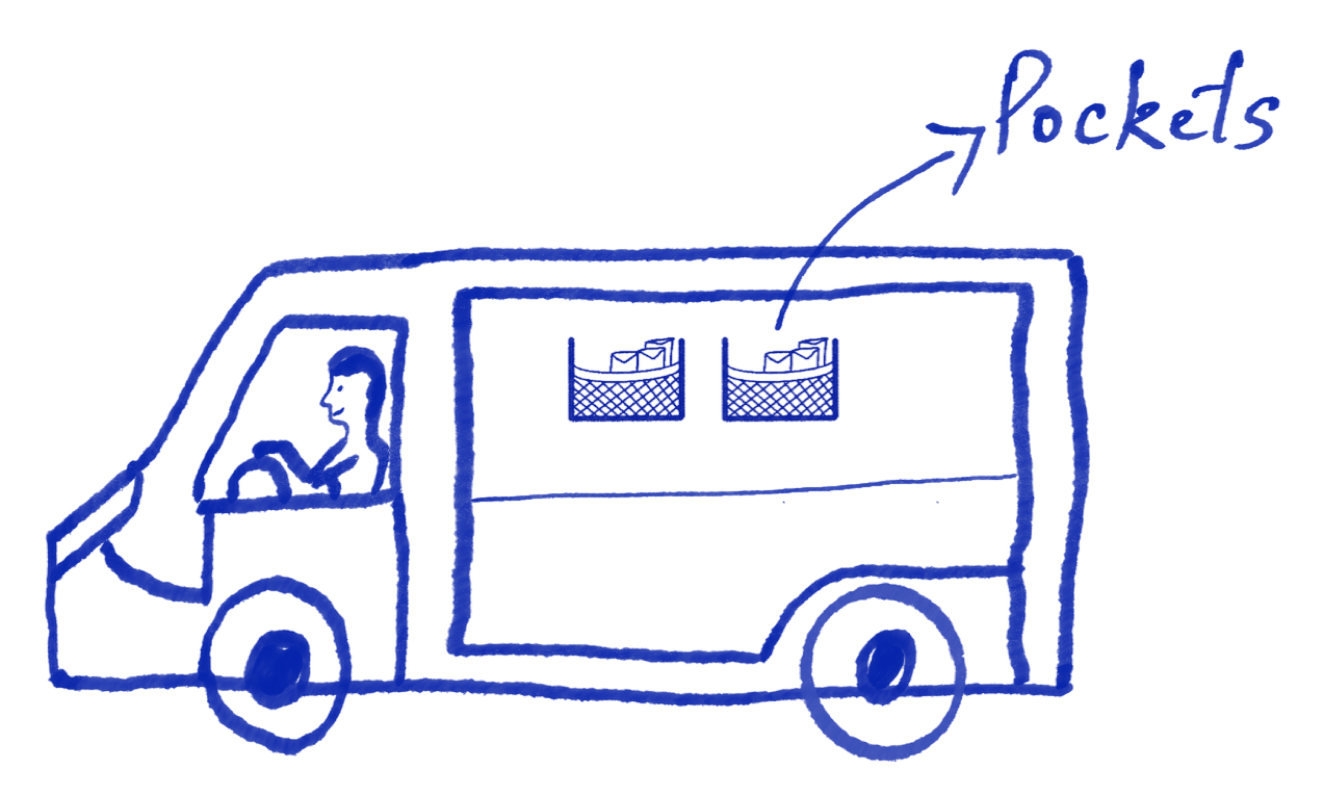
Pockets installed in the cargo area of a delivery van
Project context
Pockets were currently only installed in distribution centers in Massachusetts. A research study was needed to understand the utilization, ergonomic and mechanical feedback of the pockets from real-world use, before the company committed to a global rollout.

My role
I led the research end to end. That meant planning the study, designing the observation and logging framework, reviewing over 300 hours of video footage, and synthesizing insights across research, mechanical, and software teams.
Also on my plate
I conducted pilot tests, facilitated exit interviews with drivers, and worked closely with engineers to translate research findings into actionable design and deployment decisions.
Research Focus
Learning Objectives
Pockets are modular storage compartments that help delivery associates (DAs) organize packages in the cargo part of their delivery vans. The company wanted to know whether to implement them wide, across the globe. so we studied their utilization, ergonomics, and mechanical performance under real driving conditions.
GOAL 01
Understand how often, and how, DAs actually use the pockets in real driving conditions.
GOAL 02
Assess ergonomic and mechanical performance to inform a global rollout decision.
Key insights
60%
utilization rate observed
Why? There simply weren't enough packages for DAs to actually use the pockets for organization in their routes. They had their own strategies that helped them deliver faster and more efficiently.
Rec 01
Reduce the pocket count from 4 to 2, since most drivers used only two at a time.
Rec 02
Need more data to inform scaling strategies. Run further studies in a high package volume distribution center.
methodology
Remote video ethnography, not a field study.
This study happened during one of the busiest delivery seasons of the year, a major sale campaign where drivers were strict on time because of delivery targets. Traditional field studies would have disrupted their workflow and put those targets at risk. So I used remote video ethnography instead.


Remote video observations
11 vans in total, observed for 2 weeks.
Contextual field interviews
30 minutes each, with drivers.
300+ hours of video data
Before full rollout, I ran a pilot study with 5 vans over 2 days. This was critical to test and refine the logging framework, ensuring I was capturing the right data before scaling the analysis.
Data collection
Each day, video footage from the vans was uploaded to a secure data box. I reviewed the footage to identify DAs' package organization patterns, usability issues, and deviations from expected use, logging a custom set of metrics I defined myself:
Pocket usage frequency
Item types stored
Ergonomic reach & posture
# of pockets utilized
Use error
constraints that were a learning opportunity
CONSTRAINT 01
Trade-offs with data
I had a short turnaround time and needed both rich and usable data, so I made some careful trade-offs:
Primary focus on drivers who used the pockets at least once during their route.
Secondary focus on drivers who did not use the pockets at all.
Prioritized footage with sufficient coverage when videos were missing or incomplete.
Managed camera issues, including malfunctioning equipment and instances where drivers covered cameras.
while this prioritisation helped me only review rich data, I understand that there may have been gaps in what I missed
CONSTRAINT 02
Manual metric calculation
There were no pre-existing system metrics to measure pocket effectiveness. All behavioral indicators had to be manually defined and logged from video footage. Operational factors such as package volume and camera downtime weren't automatically captured. I manually clicked through each video to check whether the camera had been functional throughout the day.
this made the analysis
Highly time-intensive (300+ hours reviewed frame-by-frame), dependent on careful logging consistency, and vulnerable to data gaps when cameras malfunctioned or were covered.
results
Learnings from the study
learnings
Research plans change too
Our pilot showed that the initial video logging format was missing important behaviors, so I changed it mid-study. It taught me that research methods need iteration too.
Keeping other teams involved helped
Weekly updates with the mechanical and systems teams helped me share what I were seeing early, instead of waiting until the end of the study.
One thing I’d do differently
I didn't link drivers to van IDs, which made it harder to connect behaviors from the footage back to interviews. A small operational detail, but something I'd plan for next time.
Being thoughtful about field research
Observing people at work also made me more conscious of privacy, bias and how we collect and represent people's behavior.